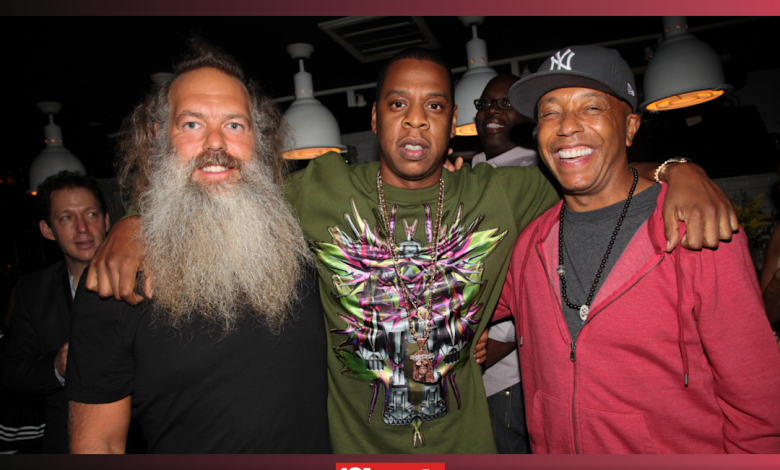
Jay-Z is set to sit down with Rick Rubin for the eight-part documentary series “Jay-Z in 8,” debuting on HBO this fall. Rubin is directing the series and will interview the rapper about his music, lyrics, life experiences and creative process. This is the type of moment the culture has been waiting for—Hov, his creative executive producer hat on, choosing exactly who he sits down with and on what terms, breaking down a career that’s defined not just hip-hop but business, celebrity, and the blueprint for mogul-building itself.
The format isn’t new, but the application is. Rick Rubin headed up a similar project in 2021 about Paul McCartney called McCartney 3,2,1 on Hulu, a six-part series that let two legends dissect creative genius without the noise of third-party narration or archival bloat. Now HBO gets eight episodes—two more than McCartney got—to dig into the man who went from Marcy Projects to global enterprise. The extra episode count matters. It’s room for Jay to breathe, room to get into the real conversations that people actually want to hear.
The pairing here carries weight that goes beyond just producer selection. Rubin produced Jay-Z’s “99 Problems” for “The Black Album” in 2003, which means these two have actual history in the studio, actual collaborative trust. This isn’t some hot-take interviewer trying to catch Hov slipping. This is a conversation between two architects who understand the craft at the cellular level. The teaser alone set the tone: Jay tells Rubin: “Everyone had this same experience, except I was the one that could stand on the soapbox and, like, articulate what we were going through.” Rubin replies: “Without the pain, you wouldn’t have done the work.” Jay responds: “The pain, you don’t say it’s necessary, you don’t say you need it, but if it’s there, you use it.” That’s not clickbait talk—that’s the kind of depth that separates a real documentary from content.
Timing is everything, and HBO knows it. He’s been plotting celebrations in honor of the 30th and 25th anniversaries of two of his most revered albums, “Reasonable Doubt” and “The Blueprint,” respectively, with a series of shows and activations across the globe. He made his grand return to the stage in May as a headliner at the Roots Picnic, where he revisited hits and deep cuts from his discography. The Roots Picnic performance in particular—where he freestyle dissed Drake, Kanye, and Nicki Minaj—proved that Jay still has the cultural temperature; he can still move the needle just by showing up. The doc drops into that moment when everyone’s paying attention, when the 30-year Reasonable Doubt anniversary and 25-year Blueprint celebration are creating a frame for people to sit with his entire catalog all over again.
Executive producers include Shawn Carter, Daniel Kaluuya and Rubin. That Kaluuya presence is worth noting too—actor and filmmaker, Oscar winner, someone with serious creative control and vision who’s moved steadily into production. His involvement positions this as a project with creative muscle behind the camera. The series is set to make its debut on HBO this fall. It’ll also be available to stream via HBO Max.
The larger story here is control. Jay-Z has always understood that access is currency. He rarely does interviews. When he does—like his GQ sit-down earlier this year or his New York Times Popcast—those conversations become cultural moments because they’re rare. He’s treated his own narrative like his label would treat a limited-edition drop. With “Jay-Z in 8,” he’s not just sitting down; he’s sitting down on his terms, with a producer he trusts, on a platform (HBO) that has resources and prestige, with full creative involvement through his executive producer credit. He’s controlling the frame. He’s controlling the flow. He’s controlling the story.
The 16BARS take: Jay-Z is too smart to just make a documentary—he’s making a statement about legacy and leverage in real time. When the dust settles on 2026, this will be the definitive text on what Hov wanted the culture to know about the pain behind the work.