
In a stunning reversal, California prison officials are now claiming Tory Lanez shares responsibility for his own stabbing—arguing he knowingly accepted the dangers when he agreed to his housing placement. The move comes as the rapper pursues a $100 million federal lawsuit against the California Department of Corrections and Rehabilitation.
The exclusive filing, obtained by AllHipHop and submitted by T. Valdez, the acting warden at California Correctional Institution in Tehachapi, essentially tells the court: Lanez signed up for this. According to the defense document, “[Tory Lanez] consented to his prison housing classification and assignment and assumed any risk alleged to be associated with that housing.” Never mind that the filing doesn’t actually explain what he supposedly consented to, when he consented, or whether he was even aware of the specific threat posed by his cellmate.
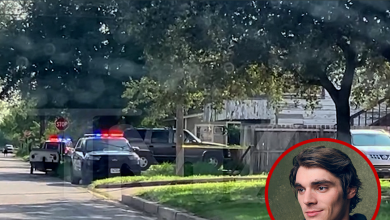
This is the legal equivalent of a Hail Mary, and it reeks of desperation. On May 12, 2025, at 7:20 a.m., Lanez was brutally attacked by fellow inmate Santino Casio—a 42-year-old convicted murderer serving a life sentence for second-degree murder and first-degree attempted murder. Casio stabbed Lanez 16 times with a homemade shank, leaving the Canadian rapper with wounds across his back, torso, head, and face. Both his lungs collapsed. He was airlifted to a hospital in critical condition. The injuries left him with permanent facial scarring that, as his legal team notes, could end his music career before he even gets out.
Casio’s history isn’t subtle. According to prison records, he’s been convicted of assaulting other inmates with deadly weapons (2008) and manufacturing weapons behind bars (2018). He’s a walking violation waiting to happen—which is precisely why housing him next to a high-profile celebrity inmate borders on negligence. Lanez’s lawsuit argues that the choice to house Casio alongside him “was known or should have been a known danger,” especially given Lanez’s celebrity status inside the prison system, which made him a potential target.
Casio himself told TMZ in a May 24 interview that he acted in self-defense, claiming he’d heard rumors about a bounty on his head and spotted a suspicious bulge in Lanez’s pocket. Lanez’s team rejected that story outright, calling it an “absurd fabrication.” No weapon was ever found on Lanez.
The warden’s defense goes further, invoking what’s known as the “superseding cause” argument—basically, the prison is trying to shift all blame onto Casio’s intentional criminal act rather than accepting any institutional responsibility. They’re also claiming qualified immunity, the legal shield that often protects government officials from personal liability. Translation: we did nothing wrong, and even if we did, you can’t sue us for it.
Here’s the thing: Lanez is already serving a 10-year sentence for the 2022 conviction in the Megan Thee Stallion shooting (July 2020 incident where he shot her in the foot). He’s locked up in the system’s custody. The state has a constitutional duty to protect inmates from known dangers—that’s Corrections 101. The fact that prison officials are now arguing Lanez “consented” to potential violence because he accepted a housing assignment is the kind of legal gymnastics that usually only appears in bad faith arguments.
Lanez’s legal team is seeking $1 million per stab wound (16 wounds = $16 million), plus $10 million for facial scarring and career harm, plus $25 million for pain and suffering. It’s aggressive, but given what went down, it’s not unreasonable. A high-profile inmate with known enemies shouldn’t be bunked with a violent lifer. That’s prison management 101, and California’s CDCR isn’t looking good on this one.
The 16BARS take: Prison officials trying to blame Lanez for his own stabbing while offering zero explanation of how he supposedly “consented” to being housed with a murderer is peak institutional cowardice. Even if the state wins on qualified immunity, the optics here—and the facts—suggest the CDCR failed its basic duty to protect.