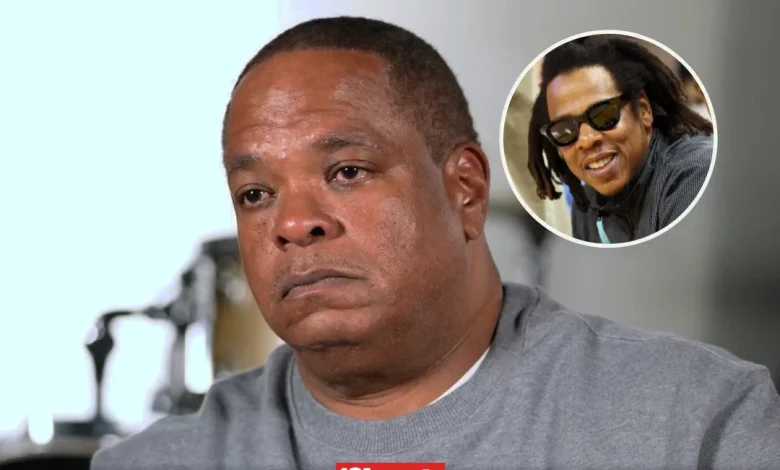
Jay-Z referenced the infamous 1999 stabbing incident during his Roots Picnic freestyle, and Lance “Un” Rivera wasn’t about to let it slide. In a recent interview on The Art of Dialogue, Rivera was asked about Jay-Z once again referencing the stabbing. But here’s the wildest part: Rivera said “Unless you’re going to pay me, send me a check. I’ll be a part of your marketing strategy,” essentially telling the billionaire mogul to either stop using his trauma or cut him a check.
For context, the stabbing occurred in December 1999 at the Kit Kat Club in New York during the release party for Q-Tip’s album Amplified. In October 2001, Jay-Z pleaded guilty to a third-degree assault charge and was sentenced to three years probation. But here’s the thing that’s been nagging at the culture for years: in a 2023 interview with DJ Vlad, Rivera clarified “No. JAY-Z was not the guy that actually stabbed me that night.” So Jay took the charge, did his time on probation, and moved on to become hip-hop’s biggest mogul. Meanwhile, this is far from the first time he’s referenced the altercation—he previously alluded to the stabbing on 2002’s “I Did It My Way,” took a more humorous approach on 2005’s “Dear Summer,” and reflected on the incident during 2017’s “Kill Jay Z.” The Roots Picnic freestyle marked at least the fourth time the episode has appeared in his music.
What makes this response different is the tone. Rivera said “He talks about trauma, but what about my trauma?” and repeatedly referencing the incident sends the wrong message. “If you want to send the message to your brand and your partnerships that you’re dangerous… using me as an example of how dangerous you are just to sell products, then that’s up to him,” Rivera said. He’s essentially calling out a pattern: every time Jay needs to flex his toughness or pump up an album cycle, he pulls out the ’99 stabbing card and uses Un’s name as a prop.
During the freestyle at Roots Picnic in May, Hova spat “Y’all tryin’ to get under skin? I really get under skin / Ask “Un” how I’m playin'” while making a stabbing gesture. It’s the kind of line that gets the crowd hyped—a calculated flex on a legend’s willingness to revisit old street credibility. But Rivera’s point cuts deeper: he’s not upset that Jay raps about it (anymore), he’s upset that it’s become a brand strategy, a go-to way to remind people that Hov is dangerous, all while he’s also a billionaire businessman with partnerships and a family.
In an open letter before the interview, Rivera praised Jay-Z’s influence as one of hip-hop’s most important figures while encouraging him to use his platform to inspire healing, unity and leadership rather than revisiting decades-old violence. He wrote that Jay-Z’s voice “still matters” because it reaches communities that often feel overlooked and argued that his legacy could have an even greater impact by focusing on hope instead of conflict. But by the time the actual interview rolled around, Rivera was more direct: stop using him as a marketing tool.
This is where it gets messy in the best way. Jay’s been charged with assault, served probation, built an empire, and become an institution. Un’s been the ghost story that haunts that narrative—the guy Jay allegedly stabbed to prove something, even though he didn’t actually swing the blade. Over 25 years later, Rivera’s essentially saying: either leave me out of it, or pay me for the advertising.
The 16BARS take: Rivera suggested that “most of Jay-Z’s intentions are purely based on marketing rollouts” and that he’s “part of the rollout for the products that’s going out right now in the streets,” which means he’s calling out the commodification of trauma in real time. That’s a conversation hip-hop hasn’t fully reckoned with yet.