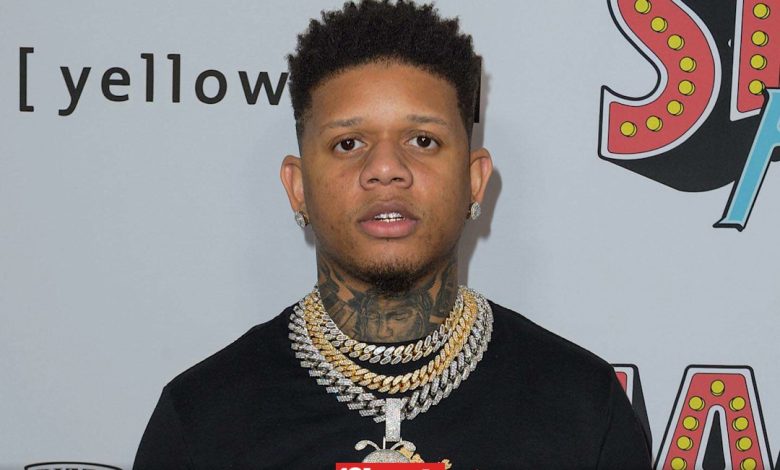
Yella Beezy is mounting an aggressive legal fight that cuts to the heart of a decades-old question in hip-hop: can rap lyrics be weaponized as murder trial evidence?
The Dallas rapper, whose real name is Markies Conway, heads to trial in August 2026 on a capital murder charge stemming from the 2020 shooting death of fellow rapper Mo3, with the jury trial scheduled for August 24, 2026. But before Conway steps in front of a jury, his defense team is fighting prosecutors over whether four of his tracks — “Keep It In The Streets,” “On Ya Head,” “Take 3,” and “Gas’d Up” — can be admitted as evidence, with prosecutors arguing the lyrics are connected to the feud that led to MO3’s death.
It’s a battle that goes way beyond typical courtroom procedure. Conway’s attorneys argue that the defense is pushing back on the state’s plan to use Conway’s own songs against him in court, contending that the lyrics—art, not confessions—violate his First Amendment rights and unfairly prejudice a jury. “What the rap music in this case are words and ideas of Mr. Conway,” his defense attorney argued to the judge. “This is what he does for a living.” Using someone’s art “only as character evidence has the potential of being unfairly prejudicial.”
But prosecutors see it differently. They’re building a narrative: investigators said Noble was in his car on the interstate when Kewon Dontrell White, while wearing a ski mask and holding a gun, approached his car. 44 bullet casings were recovered from the highway after the shooting. And the state claims there is a witness who will testify that Conway was part of a conversation about the payment for Noble’s murder, and that he withdrew $40,000 from an account days after the murder.
Dallas rapper Mo3 was shot and killed during a daytime attack on interstate 35 in south Dallas in November of 2020, and he was 28. Kewon Dontrell White, while wearing a ski mask and holding a gun, approached his car—and White, the alleged triggerman, was sentenced to almost 9 years (8 years and 8 months) on a federal gun charge in November 2022. But that conviction was for possession of a firearm by a convicted felon, not for Mo3’s murder. The murder charges against White remain pending, and Conway recruited Kewon Dontrell White to carry out the killing of Mo3, born Melvin Noble, according to prosecutors.
The beef between these two Dallas rappers was no secret. At the time of Mo3’s death, the two rappers were rumored to be beefing online through diss tracks and interviews, though both denied having issues publicly. Which is exactly why prosecutors want those tracks in front of the jury—to establish motive, to show the feud was real, to prove Conway had reason to want Mo3 dead.
This case sits at a crossroads for hip-hop and the law. Rap lyrics have been weaponized in courtrooms for years—from crack-era beefs to modern gang violence cases. The argument from the culture has always been consistent: rappers tell stories, they adopt personas, they play the dozens in mic form. Art shouldn’t become evidence. But prosecutors argue that when lyrics directly reference real beefs, real names, real threats made in real time, the jury deserves context.
Conway’s defense team has a solid argument—but it’s an uphill climb. Texas law permits the death penalty in capital murder cases, though prosecutors have not yet said whether they plan to pursue that option. That’s the weight hanging over August. The judge will rule on which songs get played, which stay silent. And that ruling could set a blueprint for how courts handle rap as evidence for years to come.
The 16BARS take: Yella Beezy shouldn’t have his career weaponized in a courtroom—but the feud was public, documented, and real. If the law allows prosecutors to prove motive through past actions, lyrics from the same artist during the same war shouldn’t be categorically off-limits. The defense’s answer isn’t “ban rap evidence”—it’s stronger argument about why these specific tracks don’t prove he hired a hitman.