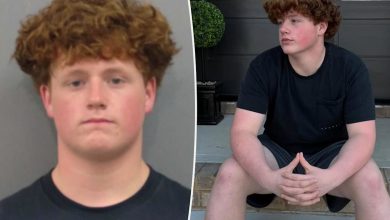

A Memphis mother is facing first-degree murder charges after a late-night discovery inside her home ended in a fatal shooting that’s now sparking heated debate online about parental instinct, self-defense, and where prosecutors say the line was crossed.
Kendra Scott, 36, appeared in court Monday, where a judge set her bond at $100,000. She’s been charged with first-degree murder and employing a firearm during the commission of a dangerous felony in the death of 20-year-old Rodderius Morton. The case erupted from a scene that sounds like every parent’s nightmare—except the aftermath landed her in the criminal justice system, not freed on the grounds of protecting her child.
Here’s what went down: On July 16, 2026, at approximately 1:50 a.m., officers responded to a shooting in the 3000 block of Travis Rd. When police arrived, they found Morton lying in the front yard with a gunshot wound to the back of his head. He was pronounced dead at the scene. The victim, was special needs, and he was a special needs student, according to a former teacher who came forward wishing “things were handled differently.”
The sequence of events, according to court documents, reads like a compressed family horror film. Scott returned home around 1:40 a.m. and discovered Morton hiding beneath the bed of her 13-year-old daughter. Scott’s daughter reportedly told investigators she’d invited Morton into the home—and knew her mother had warned her that if she ever brought a boy into the house, consequences would be severe. When Scott came home banging on the door and demanding to know who was there, the teen hid Morton under the bed. What happened next: As Morton tried to leave, Scott found him and the two began to argue. The argument quickly devolved to Scott yelling at the victim to “Get out of my house, b—,” according to the affidavit. Then, the man made it to the front porch. But Scott was allegedly right there with him. A single gunshot followed.
When Memphis police questioned Scott at the scene, she gave them a four-word justification that’s now at the center of the legal storm: “saw a dude under my kids’ bed, and I did what I had to do.” Her attorney, Blake Ballin, has pushed back hard against the first-degree murder charge. Ballin says she did not act with premeditation when she fatally shot Rodderius Morton. He’s arguing the case hinges on what happened in those seconds on the front porch—a moment of raw emotion, not calculated murder.
But prosecutors aren’t buying it. The affidavit suggests Morton was already fleeing when he was shot, meaning self-defense claims get shakier. A retired law enforcement officer and firearm self-defense trainer said the details currently available do not appear to meet the requirements of Tennessee’s Castle Doctrine. The law allows people to defend themselves or others inside their home when someone breaks in while committing or attempting to commit a violent felony. That’s the legal calculation prosecutors are banking on—that Scott crossed from defending her daughter into pursuing and killing someone who was already running.
Meanwhile, the internet is losing it. The public conversation has already exploded across social media. Many commenters have expressed sympathy for Scott, arguing that many parents would react emotionally after finding an adult man hiding in a child’s bedroom. Others have questioned whether criminal charges are appropriate. Some are calling this a miscarriage of justice; others see a woman who had a gun and used it when she didn’t have to. The racial dimension—a Black mother facing murder charges in a system historically stacked against her—is also baked into the discourse, even if nobody’s saying it out loud yet.
Scott’s next court appearance is scheduled for August 3, and her case is going to become a crucible for how America debates parental rights, self-defense laws, and the split-second decisions parents make when their kids are in danger.
The 16BARS take: This case isn’t really about whether Scott had a reason to be furious—it’s about whether fury justifies a fatal shot to the back of the head. The internet’s rage won’t matter; the evidence will. And if prosecutors can prove Morton was already running, “I did what I had to do” stops being a defense and becomes a confession.