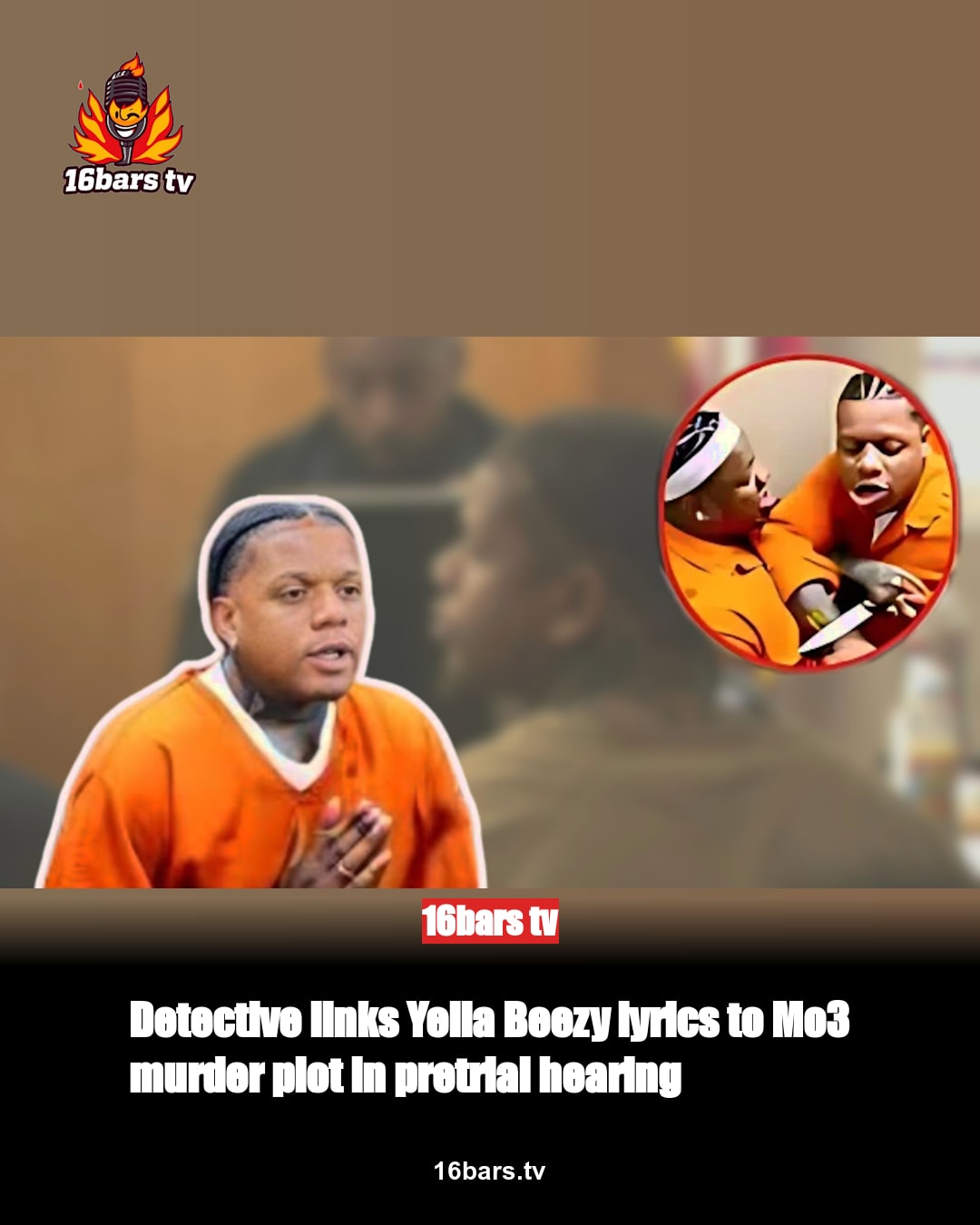
Detective Eric Barnes testified that throughout the feud between the rappers, Yella Beezy allegedly said in a song he put a bounty on the head of MO3. Last week in a Dallas courtroom, a detective laid out what prosecutors are building as their case against Dallas rapper Yella Beezy, who was indicted by a Dallas grand jury on March 18, on charges of capital murder while remuneration.
Melvin Noble, who went by Mo3, was killed in an ambush-style shooting on I-35 in Dallas in 2020. More specifically, Mo3 was shot just before noon Wednesday on I-35 in Dallas and was transported to a hospital, where he died from his injuries on November 11, 2020. He was 28. The detective’s theory: Yella Beezy was accused of hiring a hitman named Kewon White to murder Mo3, a.k.a. Melvin Noble.
But here’s where it gets hip-hop culture specific—and legally explosive. Detective Eric Barnes pointed to lyrics in the songs “Hitters,” “Keep It in the Streets,” and “On Your Head,” testifying that they referenced paying for violence and putting money on someone’s head. Investigators had to go to YouTube to get it. They had to go to social media to get it. The prosecution is arguing that the 2019 song “Hittas” marked the first time Conway referenced putting “money on somebody’s head.” That’s not just bars anymore—it’s alleged evidence of a conspiracy.
The timing matters too. Alleged shooter Kewon White appeared on stage with Yella Beezy at a concert shortly before MO3’s death, suggesting White was trusted by the rapper. So prosecutors aren’t just citing random lyrics. They’re weaving together a narrative: a documented feud, lyrics referencing paid violence, a co-conspirator who had stage access, and finally, a body on I-35.
Yella Beezy, real name Markies Conway, has pleaded not guilty. Conway has pleaded not guilty. But the defense is fighting on new ground now. The past two days of testimony centered around a key question of if a rapper’s song lyrics can be used as evidence. Beezy is maintaining his innocence, with his legal team arguing his lyrics are merely just for entertainment and should not be used against him.
This is a watershed moment for hip-hop in the American legal system. For decades, prosecutors have used rap lyrics to build cases—sometimes fairly, often not. The logic is tempting: if you rap about a crime, you’re confessing. But the culture knows the difference between narrative, braggadocio, and autobiography. A 2019 track reference to “money on somebody’s head” might be part of a beefing narrative, a boast about street status, or a deliberate metaphor. Now a court is going to decide if the jury gets to hear it.
The actual trial is set to begin on August 24. The judge hasn’t ruled yet on admissibility of the lyrics. What happens in that Dallas courtroom will ripple through every rap-related trial in America. Because if these songs go in as evidence and a jury convicts on that basis, you’ve just made rap music itself a liability—not just for alleged murderers, but for every artist with a street narrative.
The 16BARS take: Yella Beezy might have the bars, but the prosecution has a detective with a YouTube account and a theory. Whether those lyrics stick in a jury’s mind—or whether the judge throws them out as prejudicial—will define how much rap can hurt you in court.