
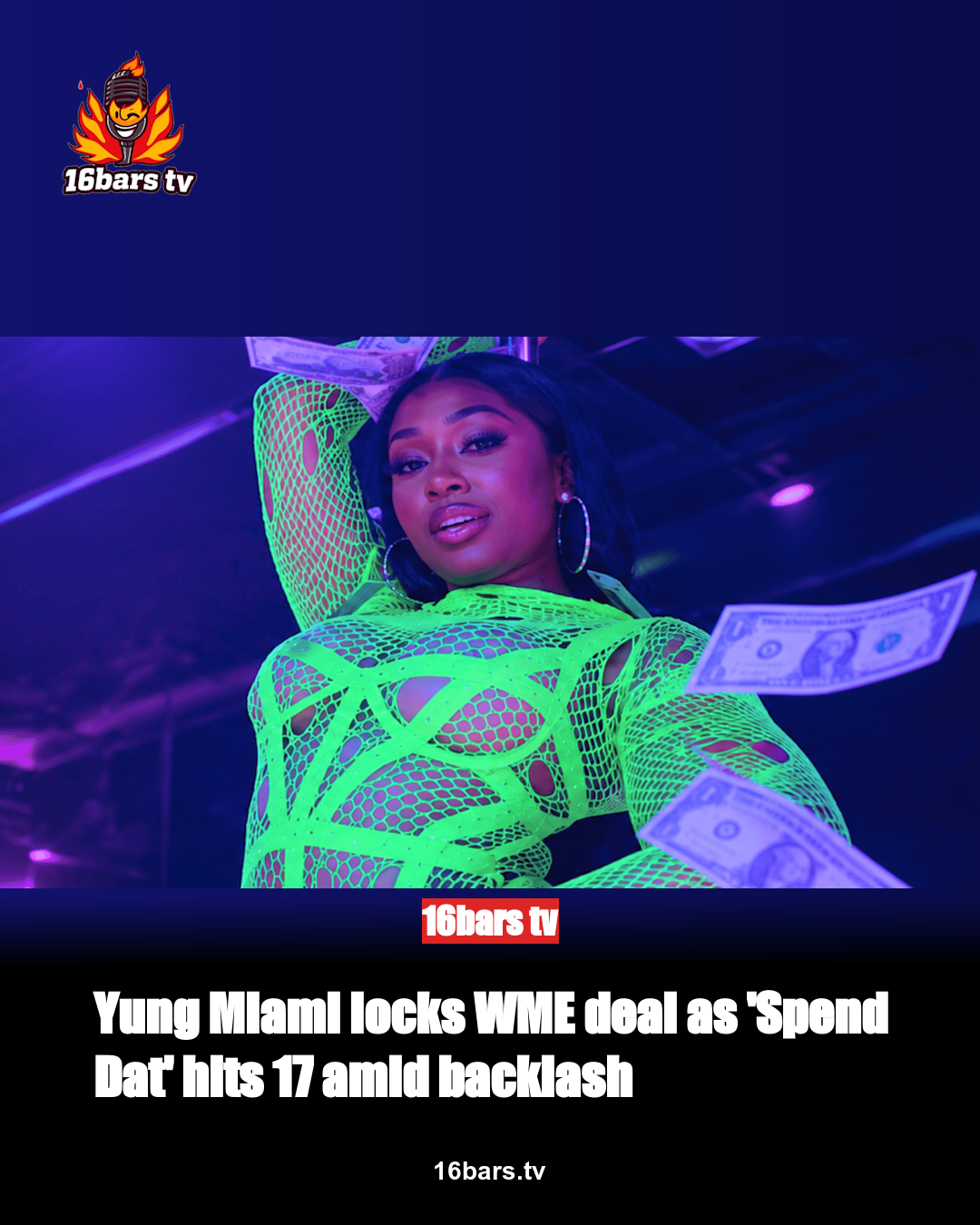
Yung Miami just signed worldwide representation with WME—the same agency repping Billie Eilish, Rihanna, and The Weeknd—at exactly the right moment. Her controversial summer anthem “Spend Dat” is climbing the Billboard Hot 100 while the culture wars rage around it, turning every thinkpiece and callout into free marketing that money can’t buy.
The song currently sits at No. 17 on the Hot 100 after topping Billboard’s Rap Airplay chart. She performed it during the New York Knicks’ Championship Parade last month, cementing its status as the season’s inescapable anthem—the kind of track that becomes the soundtrack to the summer whether critics like it or not.
But here’s where it gets interesting: the backlash actually fueled the climb. When India Arie weighed in with concerns about the song’s messaging around scammer culture, it didn’t kill momentum—it sparked a wider conversation that pulled more eyes (and ears) to the track. Some saw it as a critique of problematic lyrics; others reframed it as another case of gatekeeping against a Black woman’s creative choices. Either way, “Spend Dat” kept climbing.
The WME move positions Yung Miami as a genuine multi-hyphenate player in the culture. She’s not just a rapper anymore—and she hasn’t been for a minute. Her podcast “Caresha Please” won the BET Hip-Hop Award for Best Hip-Hop Platform in 2023, her “Resha Roulette” drinking game is the #1 on Amazon (and sold out immediately when it dropped in 2022), and her appearances in films like “You People” and “Bad Boys for Life” proved she can move fluidly between mediums. The WME deal covers all areas of her career, which means the agency is betting on her ability to build an empire, not just ride a hit.
Her solo debut album is dropping this year on Uptown Records—the same label that once broke Naughty by Nature and Heavy D. That’s legacy weight. The timing of the WME signing with “Spend Dat” at its peak isn’t coincidence; it’s leverage. The controversy became white noise, the numbers told the real story, and Yung Miami understood the assignment.
The criticism from India Arie and others forced a conversation about influence and responsibility in hip-hop, but the conversation itself kept the song alive in the cultural consciousness. While some were debating the ethics of the track’s subject matter, casual listeners were just vibing with a beat that hit different. That’s the paradox of a viral moment: the louder the objections, the more curious people become.
For WME, signing Yung Miami isn’t about one song. It’s about recognizing that she’s built a brand that translates across platforms—music, streaming, products, media appearances. The “Spend Dat” moment just proved she knows how to command attention and convert noise into momentum.
The 16BARS take: When your biggest critics accidentally become your best promoters, you’ve won the internet. Yung Miami turned a song people said was problematic into a cultural moment, then sealed a major agency deal while it’s still climbing. That’s not luck—that’s leverage.