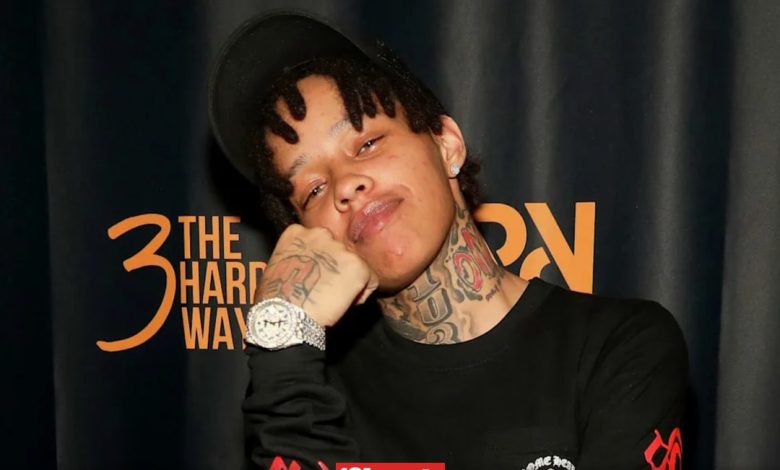
The second time’s the charm—at least for federal prosecutors. Houston rapper OMB Bloodbath (Alexandra Nicks) got convicted this week on charges of murder in aid of racketeering and using a firearm during a violent crime that claimed the life of 53-year-old Samuel Johnson nearly nine years ago. The verdict, handed down Monday after a 9-day retrial, represents a major W for the Department of Justice after a jury deadlocked on identical charges back in January, forcing prosecutors to take another swing at a case that’s become one of Houston’s most closely watched gang prosecutions.
Nicks, 32, and her co-defendant Shaquille Richards allegedly directed members of the 100% Third Ward gang (also known as the 103 gang) to carry out a retaliatory shooting on October 16, 2017, targeting a member of the Young Scott Block gang. But when four gang members opened fire on London Street in a stolen car, their bullets didn’t hit just their intended target—they also struck Johnson, a convenience store clerk and completely innocent bystander who had the misfortune of being in the wrong place at the worst time. The gunmen were all tracked down and convicted in state court, but prosecutors pivoted to the bigger play: going after the alleged leaders who gave the orders. That’s where Nicks and Richards came in.
When the first trial tanked in January, the jury spent roughly 20 hours over three days deliberating but couldn’t reach unanimity—a requirement under federal law for conviction or acquittal. So prosecutors came back swinging in May with fresh ammo: cell phone data from Nicks’s phone that hadn’t been presented in the first trial. That additional evidence apparently proved decisive. Prosecutors also leaned heavily on jail phone calls between Nicks and Richards, text messages, Instagram DMs, and social media posts that the government argued showed the two coordinating the hit. Assistant U.S. Attorney Kelly Zenon-Matos set the tone early by telling jurors, “This case is not about shooters. This case is about power.” It was a clean narrative: two gang leaders using their leverage to order violence, even when they weren’t pulling triggers themselves.
Nicks’s trajectory before all this had been promising. She’d built a loyal following on YouTube and Instagram with raw freestyle videos that captured the grit of Houston’s Third Ward, and in 2020 she inked a deal with Interscope Records—a genuine shot at making it in the mainstream. Songs like “Bloodbath” and “Third Ward” became exhibits in her own prosecution, with prosecutors arguing her lyrics and social media presence actually concealed a deeper involvement in gang operations. That authenticity that built her fanbase became evidence against her in federal court.
Richards, also convicted on the same charges, faces the same legal jeopardy. Both defendants are scheduled for sentencing on November 4 and could face life sentences. Four co-defendants—Deandre Watson, Mertroy Harris, Marcus Christopher, and Marquis Erskin—already pleaded guilty and are facing sentencing on September 2, with each looking at potential life terms as well.
What makes this verdict significant goes beyond one rapper’s legal nightmare. Nicks’s case reflects a broader crackdown on gang leadership at the federal level, where prosecutors are increasingly targeting alleged organizers and coordinators rather than just street-level shooters. The government’s theory: you don’t need to fire the gun to be responsible for the murder if you gave the order or created the conditions for it to happen. That logic has become standard in racketeering cases nationwide, but it’s also contentious—defense attorneys and criminal justice advocates argue that it stretches liability in ways that blur culpability and that prosecutors can over-rely on speculative evidence like social media posts.
The retrial also exposes how broken jury systems can be. Two juries, two different outcomes. The evidence didn’t change fundamentally—the cell phone data was new, but the core narrative stayed similar. That raises real questions about jury reliability and whether convictions are based on rock-solid evidence or just the luck of getting the “right” twelve people in a room. For Nicks, the cost of that variance is potentially a life sentence.
The 16BARS take: OMB Bloodbath’s guilty verdict is a loss for her, but the real issue is whether federal prosecutors proving “leadership” in gang violence through social media evidence and phone calls is justice or power politics. Either way, Houston just lost a promising young artist to a system that gave her no real exit ramp once she was caught in that world.