
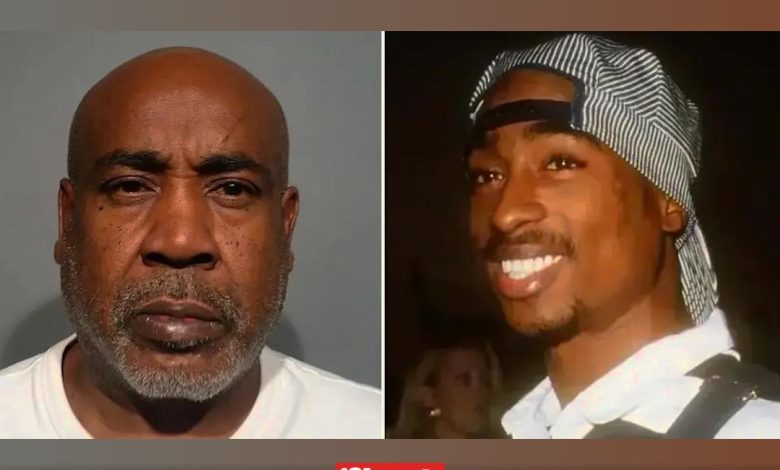
A jury of 10 women and six men is set to hear opening statements Monday in Las Vegas in the trial that hip-hop has been waiting three decades to see. Duane “Keffe D” Davis, an ex-gang leader, is accused of orchestrating Tupac Shakur’s 1996 killing. The culture isn’t just watching—it’s holding its breath.
Tupac was shot multiple times in a drive-by shooting in Las Vegas on September 7, 1996, after attending a Mike Tyson fight that evening and died six days later at the age of 25. Tupac was in the passenger seat of a BMW driven by Death Row Records co-founder Marion “Suge” Knight on Sept. 7, 1996, when shots were fired from a Cadillac at a red light; Knight survived, but Shakur died six days later. For nearly thirty years, it was hip-hop’s greatest unsolved tragedy—the mythology, the speculation, the armchair detectives all searching for answers that law enforcement couldn’t provide.
Then Keefe D opened his mouth. Las Vegas prosecutors say they have strong evidence that Keefe incriminated himself in a book that he wrote and released back in 2019, Compton Street Legend, as well as during many interviews he has given to police and media outlets since 2008. This is the stunner at the heart of the case: prosecutors plan to heavily rely on Keefe D’s 2019 memoir, Compton Street Legend, in which he detailed his purported role in the events leading to Tupac’s murder. A retired LAPD detective investigating the case put it bluntly: Keefe D “talked himself straight into prison.”
Prosecutors describe Davis as the “shot caller” who orchestrated the killing, and have not accused Davis of pulling the trigger but instead say that he made the calls that led to Shakur’s death and provided the gun. Keefe D, 63, faces a charge of murder with a deadly weapon, specifically with the intent to promote, further, or assist a criminal gang in the killing of Tupac Shakur. But here’s where it gets messy: Keefe D has publicly disavowed his own statements from the book. He claims it was all fiction written to make money, that his co-author exaggerated, that he never even read the memoir bearing his name. Davis shares a co-writing credit but claims “I’ve never read the book,” saying “I just gave him details of my life.”
The beef here runs deep into hip-hop’s East Coast-West Coast wars. Shortly before the drive-by shooting, Anderson was beaten in a brawl at the MGM Grand casino involving Shakur and his associates, including Knight; authorities and Davis himself say the shooting was an act of retaliation for beating up Anderson, with Davis writing in the book, “Them jumping on my nephew gave us the ultimate green light to do something.” That’s the motive. According to Davis’ previous accounts, he provided the firearm used in the shooting of Shakur to his nephew, Orlando Anderson, who is believed to be the gunman responsible for Tupac’s murder. But Anderson is dead, so he can’t testify.
The trial is expected to commence with opening statements on Monday, August 17. If found guilty of the charges against him, Keffe faces life in prison. The jury—10 women, 6 men, now sworn in—will decide whether Keefe D’s own memoir and old interviews are confessions or fiction, whether prosecutors can prove orchestration from a cold case that went dormant for decades.
During jury selection, potential jurors faced questions about their knowledge of Tupac Shakur’s music, opinions on gang-related activities, as well as their favorite books and films to assess any potential biases ahead of the high-profile case. The jury knows who they’re judging. They know the name Tupac. They know what this moment means.
The 16BARS take: Keefe D either confessed his way into a prison cell or he wrote the unluckiest memoir in hip-hop history. Either way, the culture finally gets its day—but the jury has to believe his own words were lies.