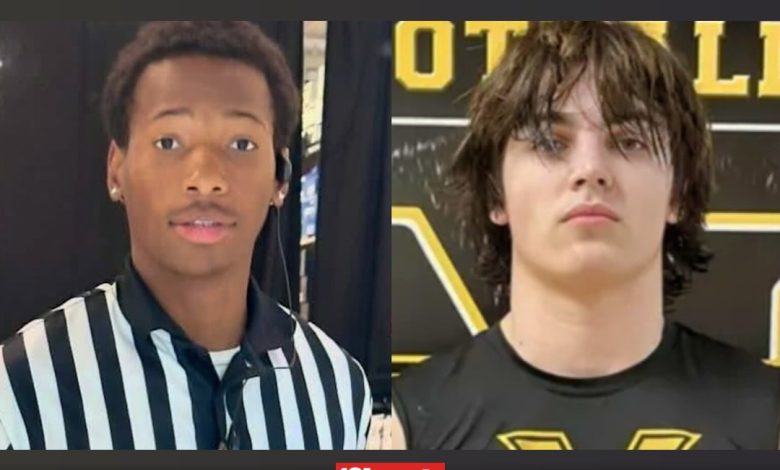
The receipts just dropped, and they’re damning from both sides.
Karmelo Anthony allegedly sent his then-girlfriend a photo of a knife and talked about stabbing someone shortly before he killed Austin Metcalf, with prosecutors saying he texted her “I’m lowkey on the verge” and “Imma stab someone and lick the blood off the blade.” That evidence never made it to the jury that convicted him of murder. But here’s the kicker: Austin had previously spray-painted racist and antisemitic graffiti including the words, “kill all black people.” That evidence was hidden too.
Both bombshell revelations surfaced Thursday during a hearing on Karmelo’s push for a new trial—and they expose what defense attorneys are now calling a courtroom game where the jury was kept in the dark on both sides’ worst material. This wasn’t incompetence. Both sides agreed not to introduce character, reputation or prior-conduct evidence, a handshake deal prosecutors and the original defense team supposedly made to “keep things calm” as racial tensions boiled over across North Texas.
Let’s be clear on the timeline: On April 2, 2025, Austin Metcalf, a 17-year-old student at Memorial High School, was murdered by Karmelo Anthony, a Centennial High School student, while attending a school track meet in Frisco, Texas. Anthony stabbed Metcalf after an altercation. A jury convicted Anthony of murder on June 9 and sentenced him to 35 years in prison after rejecting his claim that he acted in self-defense.
But the case spiraled into a culture-war chessboard the moment it went public. The case was the subject of national public attention, and viral social media posts emphasized the races of the perpetrator (who is Black) and victim (who was White). White nationalist groups showed up outside the courthouse. Death threats flooded both families’ homes. The judge imposed a gag order. And somewhere in that chaos, prosecutors and Anthony’s first legal team decided that hiding evidence about BOTH teens’ bad history would “protect” the trial.
Except it didn’t work like that. Karmelo Anthony’s legal team had just 10 minutes to decide if he should take the stand during his murder trial, after prosecutors allegedly betrayed a handshake deal. The defense backed away from putting Anthony on the witness stand because they couldn’t introduce evidence about Metcalf’s racist past—which could’ve painted a picture of who Metcalf actually was to the jury. The motion alleged the Metcalf twins had previously been arrested for racist graffiti, the messages including “KKK Kill all black people,” “Heil Hitler,” an upside down cross and the N-word. According to the motion, Austin and Hunter Metcalf received one year of probation through the Denton County Community Supervision and Corrections Department. The document also referenced more than 50 other allegations, including fights, assaults, suspensions and numerous messages that included racial slurs and proposed violence.
This cuts to something deeper than just one trial. The culture keeps framing these cases—especially when race is involved—as binary moral choices. But what happened here is procedural erasure. A jury decided Anthony’s guilt without knowing Metcalf had spray-painted slogans calling for the death of Black people. They didn’t know about the racial slurs. They didn’t know Metcalf’s own brother Hunter was implicated in the same racist vandalism. Meanwhile, the jury also never heard that Anthony had sent those knife pics and threats to his girlfriend—which prosecutors say shows premeditation.
The real question isn’t whether the jury should’ve heard one side or the other. It’s whether a “gentleman’s agreement” to hide BOTH sides’ evidence is justice, or just jury manipulation with a press release.
The legal team has stated they intend to pursue “all available avenues of appeal” to overturn the verdict. That battle will take years. But the damage to both families, the community, and the integrity of that trial is already done.
The 16BARS take: A trial that hides evidence from both the defendant and against the victim isn’t justice—it’s a coverup that happened to result in a conviction. The fix has to go deeper than a new trial; the system that agreed to this deal needs a reckoning too.