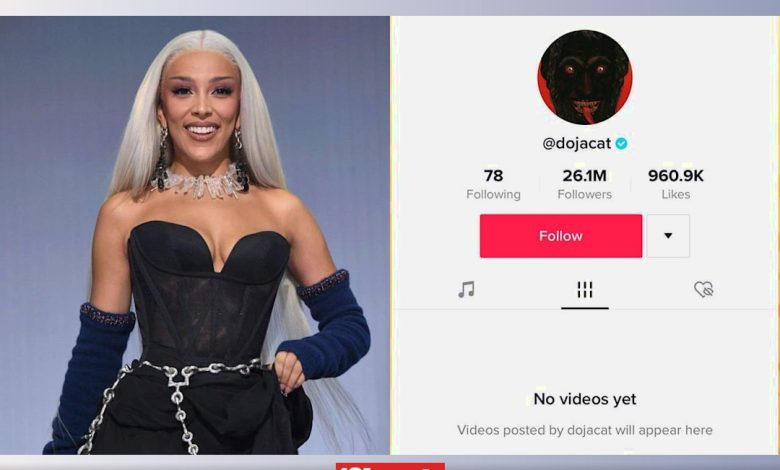
On Aug. 31, Doja Cat hopped on TikTok for a stream-of-consciousness chat and moment of reflection, and what came out was one of the most vulnerable moments the 30-year-old rapper has had in public. She opened up about her cocaine use, combating self-hate and image issues while growing up. This wasn’t a leaked clip or a forced response to a scandal—it was Doja deciding it was time to address the “demonic” narrative that’s haunted her for years.
Let’s talk specifics: Doja said she struggled with cocaine around eight years ago, which would be around the time of her Amala era, but she’s well past that. She was clear—that chapter is closed. But here’s where it gets real: She also revealed she struggled with alcohol, though she wouldn’t deem herself an “alcoholic,” although drinking became an issue for her. When explaining why the internet has a grip on her negative thoughts, she said: “The best example from my experience is using the internet as a means of validation to the negative thoughts in my head which were then brought on by drinking alcohol.” She added that she never had severe drug problems beyond weed—the cocaine and alcohol were the real demons.
But the deepest part of this whole moment wasn’t about substances at all. When addressing the claim that she’s “demonic,” Doja explained that such imagery stems from combining alcohol, drugs, and “undiagnosed” mental illness with the internet. In March, she shared details about her “agonizing” experience with borderline personality disorder, a mental health condition that affects the way people feel about themselves and others. The toxicity she’s been labeled with wasn’t about actual evil—it was about untreated mental illness colliding with the world’s loudest judgment engine (social media) and substance use as a coping mechanism.
Then came the identity piece. She revealed: “I think I hated myself since I was 8 years old. That was since I moved to my predominantly white neighborhood.” Growing up biracial in that environment clearly left scars. Doja, a biracial woman, addressed “self-hate allegations” from fans who claimed she wasn’t proud to be a Black woman. “I think I hated myself since I was—could have been like 8 years old,” she said in a separate TikTok video. “And that was when I moved to my predominantly white neighborhood.” But she’s done with that narrative now. She pushed back hard: “I, personally, want to dead those allegations. I’d really like to because it’s a negative thing. The only way I can do that is go through it, so I’ve gone through,” she said.
This drop is significant because Doja Cat isn’t some desperate artist seeking redemption—she’s been profitable, critically respected, and culturally locked in. She explained why now: “I just felt like this TikTok was necessary and I need to get this s–t off of my chest. Today felt like the right day.” That’s the voice of someone ready to control her own narrative instead of letting Twitter detectives and conspiracy theorists build her mythology for her.
The “demonic imagery” discourse around Doja Cat has been built on a foundation of misreading—dark aesthetics in her art, edgy content, visual presentation. What she’s doing here is pulling the curtain back and saying: this was never about selling my soul. It was about a biracial girl in a white space who hated herself, who used substances to numb the pain, and whose untreated mental illness made the internet’s cruelty feel like proof that she was broken. Now, years later, after therapy and work, she’s reframing the whole thing.
The 16BARS take: Doja Cat didn’t just confess—she contextualized. By linking her past demons (cocaine, alcohol, untreated BPD) to the imagery and vibe the internet labeled her with, she’s flipped the script from “dark artist” to “unwell person in a cruel system.” That’s not a redemption arc playing for sympathy; that’s accountability with nuance, and it’s rare in an industry that usually asks artists to either hide their damage or weaponize it.