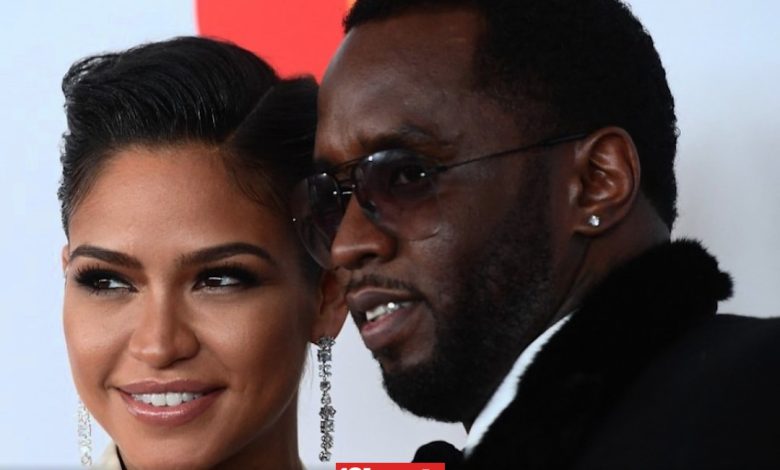
Cassie Ventura just scored a major legal victory: a judge dismissed former escort Clayton Howard’s $35 million lawsuit against her on October 21, while keeping the case alive against Diddy. The L.A. federal court ruling marks the first time Cassie has cleanly exited one of the post-Diddy lawsuits flooding the system—but the decision tells a much bigger story about who actually controlled the so-called “freak-offs” that defined this scandal.
Howard, who worked under the name “Dave,” brought suit against both Cassie and Diddy in June 2025. He alleged Cassie arranged sessions Diddy directed and accused them of using drugs and coercion to exploit him during paid encounters in New York, Miami and Los Angeles. Howard originally sought $20 million from both of them, but his latest demand reached $35 million, plus other costs tied to his alleged injuries. The legal theory was explosive: that Cassie, not just Diddy, was a trafficker—that she was the architect of exploitation, not its victim.
But Judge Anne Hwang didn’t buy it. Cassie’s attorneys challenged Howard’s amended claims, saying he failed to connect her acts to sex he performed through threats, deception or force. They pointed to his account of repeated cash payments and return visits, arguing those details undermined his portrayal of Cassie as his trafficker. More damaging to Howard’s case: his own complaint described Diddy’s violence and control over Cassie, including his power to decide when the encounters ended. In other words, even Howard’s own story made Diddy the person in charge.
Howard first sued Cassie and Diddy in June 2025, claiming they trafficked, drugged and sexually exploited him during paid encounters that continued for nearly a decade. Howard claimed Cassie contacted him around 2009 after he advertised escort services through Craigslist and Backpage. He alleged she arranged hotel meetings in New York before the encounters expanded to Miami and Los Angeles. But this is where it got messy for his case: the lawsuit says he received between $1,500 and $7,000 after each encounter. Transaction history—paid work, repeated visits, cash flow—tends not to scream “human trafficking” in a courtroom.
This ruling lands on Cassie at a turbulent moment in the Diddy story. Her legal team describes the case as an attack on a woman whose allegations helped expose years of abuse by Sean “Diddy” Combs. Cassie was a central government witness in Diddy’s 2025 federal criminal trial. A jury acquitted the mogul of racketeering and sex trafficking charges but convicted him on two counts of transportation to engage in prostitution. She testified under brutal conditions—recounting the alleged “freak-offs” Diddy forced her into, the abuse, the control. And then, after that trial ended and the dust settled, Howard sued her for the same alleged events.
Cassie Ventura says Clayton Howard’s $35 million lawsuit could discourage sexual assault survivors from speaking publicly or cooperating with prosecutors. Her attorney, Douglas Wigdor, said: “It is precisely baseless and harassing lawsuits like Mr. Howard’s that disincentivize actual victims of sexual abuse from coming forward or testifying truthfully as government witnesses.” The message from the defense: Howard’s suit isn’t justice. It’s retaliation dressed up as a civil claim. And the judge agreed enough to dismiss it.
Bad Boy Entertainment LLC and CeOpco LLC had also sought dismissal, but Judge Hwang granted only part of their request. Judge Hwang gave Howard 14 days to amend his claims. So Howard still has a window to revise. But the dismissal of Cassie—the first clean exit in this legal war—signals something: the court isn’t convinced she was pulling the strings.
Diddy, meanwhile, has a different deadline staring him down. Judge Anne Hwang kept the case alive against Diddy and set his deadline to respond for November 4. That’s when the real fight over the “freak-offs” continues—but this time, without Cassie on the hook.
The 16BARS take: Cassie just proved in court what a lot of people suspected: that framing her as a co-conspirator instead of a survivor was always a weak play. The court saw what Howard’s own complaint revealed—Diddy was the power in that equation, not her. One down, one to go.