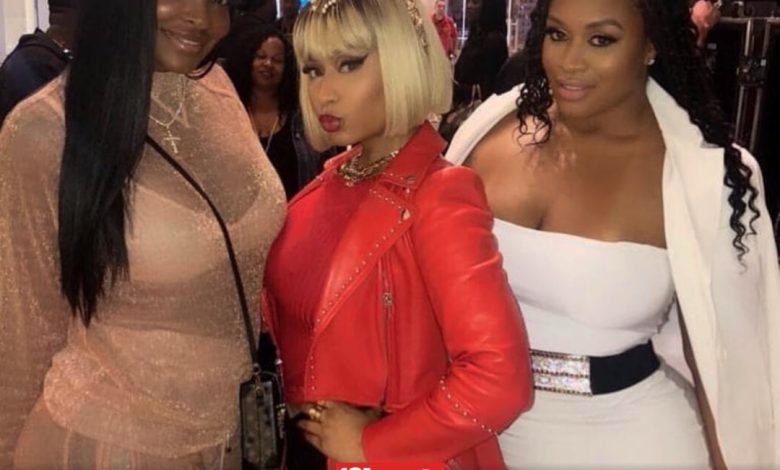
The betrayal heard ’round the culture. Rah Ali—the Love & Hip Hop veteran, media entrepreneur, and one-time right-hand to Nicki Minaj—went public this week with accusations that the Queens rap icon is actively trying to destroy her over money she says she never touched. In an Instagram video that’s still echoing across social media, Ali spoke directly to the pain of watching a 10-year bond dissolve into headlines, allegations, and silence.
“Nicki Minaj and I were friends for well over a decade. We met around 2016, and in that time frame, I have been loyal, I have been honest, I have been trustworthy,” Ali said in the statement, her voice steady but the weight unmistakable. “However, there comes a point where you have to say enough is enough… I’m not gonna sit back and allow someone to intentionally try to destroy me, simply because I won’t allow them to be a puppet master.”
That last line hits different. It’s not just about the money—it’s about control, access, and what happens when a power dynamic shifts. Here’s the timeline: in October 2025, Nicki posted about unauthorized charges on her Amex card. She never named Rah, but the internet didn’t need her to. Within weeks, Rah posted a scathing open letter defending herself against what she called a “smear campaign.” The allegations? A reported $30 million in alleged theft, swirling rumors fed by YouTuber and Nicki confidante Tasha K, who claimed that Minaj’s former assistant had leaked financial details to Rah. None of it has been proven. None of it came directly from Nicki. But the damage was already done.
“If any of these allegations were true, we’d be having a very different conversation, wouldn’t we?” Rah wrote then. “Show the evidence or apologize instead of sensationalizing headlines.”
Now, nearly a year later, Rah’s breaking her silence again—and she’s done being diplomatic. She’s saying Nicki empowered others to spread lies, that the friendship meant something real, and that she won’t allow someone she called a friend to publicly destroy her livelihood without consequences. In a follow-up message, she told Nicki to “get offline and seek help,” a line that stung precisely because it came with the weight of genuinely caring about someone who’s stopped caring back.
The story here isn’t really about the money. It’s about what happens to women in hip-hop culture when loyalty is weaponized and friendship becomes collateral damage in the court of public opinion. For nearly a decade, Rah Ali wasn’t just Nicki’s friend—she was the friend. She appeared in “No Frauds,” the 2016 track where Nicki clapped back at her enemies. She was in the trenches during the infamous 2018 New York Fashion Week brawl with Cardi B. She positioned herself as the loyal soldier, the ride-or-die, the one who had Nicki’s back when others didn’t. That proximity elevated Rah’s brand more than any Love & Hip Hop storyline ever could. She became relevant not by her own platform, but by association.
But here’s what nobody wants to say out loud: in hip-hop and celebrity culture, that proximity is fragile. It’s conditional. The moment a powerful woman—especially one with Nicki’s reach—decides you’re a liability, you become radioactive. Friends turn into scapegoats. And the internet, primed by gossip bloggers and confidantes of the powerful, doesn’t need proof. They just need a narrative.
Rah Ali’s background matters here. She’s a media entrepreneur, not just a reality TV personality. She runs Onsite Media. She’s built a business. She has leverage beyond just being “Nicki’s girl.” So when she says she’s done being silent, when she says Nicki’s trying to destroy her—she’s not just defending her reputation, she’s protecting her livelihood. She’s calling out a power imbalance. She’s saying: I was here for a decade, I was loyal, and now you’re using your platform to erase me.
The rapper hasn’t publicly responded. Her silence is the response. That’s how erasure works in this ecosystem—not with a direct confrontation, but with the withdrawal of a friendship that meant everything. Rah gets frozen out, rumors circulate unchecked, and everyone moves on because there’s always drama, always another betrayal, always another fallen friend to discuss over brunch or on a podcast.
The bigger question is whether this moment becomes a turning point for how we talk about loyalty in hip-hop culture. How many other women have been publicly buried by former friends who had a bigger megaphone? How many friendships end not with a conversation, but with a social media post from someone else? And how many of us just accept it as the cost of being close to power?
The 16BARS take: Rah Ali didn’t lose a decade-long friendship over money she says she never stole—she lost it because she wouldn’t play puppet for someone else’s narrative. In hip-hop, that choice comes with a price, and Nicki just made sure the whole culture watched her pay it.