
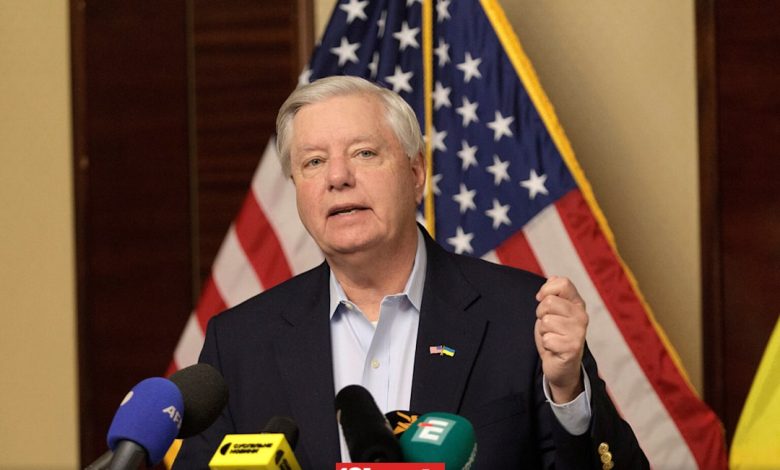
Senator Lindsey Graham, the South Carolina Republican who served in the Senate since 2003, died on July 11, 2026, at age 71. He died from a brief and sudden illness, shocking the political world just one day after returning from Ukraine where he met with President Volodymyr Zelenskyy on Friday. Emergency personnel responded to a call for “cardiac arrest” at Graham’s Capitol Hill home on Saturday night, with EMS audio indicating CPR was in progress.
The political establishment erupted in tributes, but the death of Graham—one of the most recognizable figures on Capitol Hill—carries weight because of who Graham was and what he represented: a politician who made perhaps the most dramatic political 180 in modern Congressional history. Graham was a close political ally of President Donald Trump’s, but that wasn’t always the story. In 2015-2016, Graham called Trump a “race-baiting, xenophobic, religious bigot” and warned that nominating him would damage the Republican Party. On CNN during the 2016 race, Graham asked “Tell Donald Trump to go to hell” before dropping out of his own presidential bid in December 2015.
But after Trump won the presidency, Graham’s relationship changed dramatically, with the two finding common ground on judicial appointments, national security and foreign policy. By Trump’s second term, Graham had become one of the administration’s most vocal voices on foreign policy, especially on Iran and Russia. Trump’s tribute following Graham’s death shows how completely the two had repaired their relationship, with Trump posting on Truth Social that Graham was “one of the greatest people and Senators I have ever known” and “a true American Patriot”.
Graham’s about-face has been the subject of endless political analysis—some saw it as pragmatic alliance-building, others as opportunistic capitulation. The relationship reached its lowest point after the January 6, 2021 Capitol attack, when Graham publicly broke with Trump on the Senate floor, declaring “Count me out. Enough is enough.” But the break proved temporary, with Graham later resuming close contact with Trump and rebuilding their political partnership.
Graham was chairman of the Senate Budget Committee and was seeking a fifth six-year Senate term in November, a race he was heavily favored to win in deep-red South Carolina. He had defeated multiple primary challengers in June to secure the nomination, and South Carolina Republicans must now find a replacement nominee for the general election, with a special primary expected by August 11.
What made Graham a central figure in hip-hop culture discourse was less his actual policy work and more his high-profile celebrity status as a cable news regular and Trump-adjacent figure whose personal drama played out in real time. He was the senator who felt present in pop culture, constantly appearing on cable, constantly involved in the day’s biggest political moments. His evolution from Trump critic to Trump confidant made him a symbol of political flexibility (or flip-flopping, depending on your perspective) in an era when everyone expected their heroes and villains to stay fixed in place.
The 16BARS take: Lindsey Graham’s death ends one of the strangest political redemption arcs in modern history—a man who went from calling Trump a bigot to golfing with him weekly, and America watched the whole thing happen in real time. The culture will debate his legacy endlessly, but nobody can deny he made the political calculation stick.