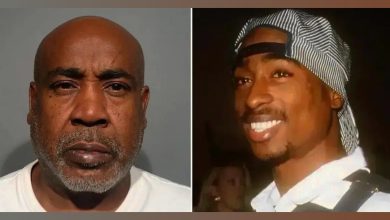

Megan Thee Stallion’s legal team just fired back at blogger Milagro Gramz with both barrels, calling her latest court filing a social media conspiracy theory dressed up in legal papers. This week, Megan’s lawyers told the federal court that Gramz’s accusations of judge bias are baseless, months too late, and legally hollow — and they’re asking the court to reject the whole thing.
Here’s what went down: On July 8, Gramz filed a motion claiming that the federal judge overseeing her case had an undisclosed conflict of interest, arguing the judge’s husband works at a law firm that represents the Roc Nation executive who funded the lawsuit against her. Specifically, Altonaga’s husband, George Mencio Jr., is a partner at Holland & Knight LLP, which represents Desiree Perez, the Roc Nation CEO. The theory? That Perez — Roc Nation’s boss — had somehow compromised Judge Cecilia Altonaga by proxy through her husband’s law firm.
Megan’s team had a simple response: nah. They filed papers this week arguing that Gramz basically picked this narrative off social media and decided to run with it six months too late. The kicker? Gramz filed the request on July 8 in the Southern District of Florida, asking the court to undo the final judgment against her under a rule that allows relief only in extraordinary circumstances. But Megan’s lawyers point out that Gramz had known about the Holland & Knight connection since September 2025, sat through the entire trial, watched the jury side with Megan, lost her appeal to delay payment — and never said a word until July.
That timing matters because under federal law, you can’t just hold onto a bias argument and spring it on the court when all your other defenses have collapsed. Megan’s team argues Holland & Knight doesn’t represent Megan in this case, never did. Perez’s separate lawsuit is in front of a completely different judge. And here’s the real flex: Judge Altonaga and her husband stand to gain absolutely nothing from ruling in Megan’s favor, which is the actual legal standard.
To understand why Gramz is swinging at this angle now, you need the full context. A federal jury in Florida found Cooper liable in December 2025 on three counts: defamation, intentional infliction of emotional distress, and promoting a deepfake video of the rapper. The jury awarded Megan $75,000 in damages. Initially, the judge cut that to $59,000, but on May 29, 2026, Judge Altonaga reversed that decision and reinstated the full $75,000 judgment, citing evidence that Cooper had coordinated with Tory Lanez and his father, Sonstar Peterson, to slander Megan.
Gramz wanted to dodge payment while she appeals. Chief Judge Cecilia Altonaga denied Gramz’s stay request on June 29, ruling she showed no likelihood of success on appeal and had offered only “generalized disagreement with the jury’s verdict and the Court’s post-trial rulings”. That’s a professional way of saying “your appeal is trash.” Gramz then claimed she was broke and couldn’t afford to pay or post bond. Court said no. Now she’s trying a completely different angle.
What makes this wild is what Gramz was actually convicted of doing. Megan’s legal filing noted Gramz broadcast that Plaintiff was a liar, directed her audience to a deep-fake pornographic video of Plaintiff, and threatened to run Plaintiff over with a car. She allegedly did all this as an extension of Tory Lanez’s defense team — years after he shot Megan in July 2020 and was convicted on three felony counts. Lanez is currently serving a 10-year sentence.
Megan has been transparent about what this case means to her. After the May verdict was reinstated, she said she felt grateful that the truth won out. For her, this wasn’t about silencing a critic — it was about holding accountable someone who helped coordinate harassment and spread misinformation to undermine her credibility during one of the darkest periods of her life.
Gramz’s argument about the judge now rests on a 1988 Supreme Court case called Liljeberg. But Megan’s team says that case actually proves their point: it was about a judge who had a direct financial stake in the outcome. Nobody here does. Holland & Knight representing other clients connected to Roc Nation? That’s not the same thing, legally speaking. And the judge never owned anything, invested in anything, or stood to gain anything from ruling against Gramz.
The 16BARS take: Gramz threw everything at this wall — broke defendant, appeal bond issues, financial hardship. Now she’s swinging at ghosts on social media and hoping a judge will overturn a jury’s verdict because of her conspiracy theory about her lawyer’s husband’s law firm’s clients. Megan’s team shut this down quick with straight legal facts, and the court should too.