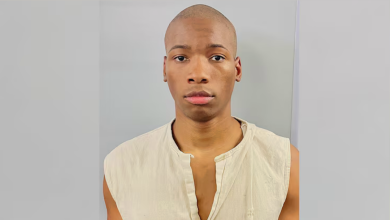

The 21-year-old singer D4vd sits locked in a Los Angeles courtroom this week facing first-degree murder charges in one of hip-hop culture’s darkest hours—the alleged killing of 14-year-old Celeste Rivas Hernandez, whose remains were discovered in the trunk of his Tesla in September 2025. As prosecutors lay out their case during an ongoing preliminary hearing, the forensic evidence is turning graphic, visceral, and damning. Her soiled clothes, her decomposed body parts stuffed in cadaver bags, blood spatters detected by luminol in his garage, and chainsaws allegedly ordered online—the pieces of this case paint a horror story that has shaken the music industry.
The Lake Elsinore girl’s decomposed body was found Sept. 8 in the front trunk of a Tesla impounded at a Los Angeles tow yard. D4vd was arrested in Los Angeles on April 16, 2026. Four days after D4vd’s arrest, on April 20, DA Nathan Hochman formally charged him with first-degree murder, continuous sexual abuse of a child under age 14 and mutilating a body. The timeline prosecutors presented is devastating: Celeste visited Burke’s Hollywood Hills home April 23, 2025, but was never “heard from” again. The criminal complaint alleges that the murder occurred on or about April 23, 2025.
But the real damage is happening in the courtroom NOW. Prosecutor Beth Silverman displayed images of Celeste’s severed arms and legs inside the front trunk of his Tesla. An investigator testified the limbs were found in a black cadaver bag … and another bag contained Celeste’s head and torso. The investigator also described maggots, flies, and an unidentified liquid inside the vehicle. Celeste Rivas’ body had liquefied and looked like “mush” in the graphic photos shown during D4vd’s preliminary hearing Tuesday, according to her family’s attorney.
The evidence against the artist—whose legal name is David Anthony Burke—connects directly to the motive prosecutors claim he had: silencing Celeste. Celeste “threatened to disclose damaging information about her relationship” with then-20-year-old d4vd “to end his career and destroy his life,” prosecutors allege. His first studio album, “Withered,” was to be released just days after the dispute, setting in motion the horrific final hours of Celeste’s life — a career-defining moment hanging over a girl’s life.
The relationship itself was predatory from the jump. D4vd and Celeste first met when she was 11 years old. In November 2023, the pair began a sexual relationship, prosecutors said. D4vd was 18 and Celeste was 13. She was a runaway from Lake Elsinore with a troubled home situation, vulnerable and targeted. He was already famous—”Romantic Homicide” had gone viral on TikTok in 2022—with access, resources, and a two-year age gap that became a chasm of power imbalance.
When she threatened exposure, prosecutors allege he acted. Prosecutors in Los Angeles County say D4vd killed her with a “sharp instrument.” Prosecutors say D4vd murdered Celeste on April 23, 2025, but mutilated her body May 5th. Prosecutors say D4vd stuffed her body in two bags that were placed in the front trunk of his Tesla. D4vd was is charged with murdering Celeste and prosecutors claim he fatally stabbed in his Hollywood Hills home in April 2025 then put her body in an inflatable pool and dismembered her with a chainsaw he ordered online. The chainsaws came from Amazon. The dismemberment was industrial. The cover-up was calculated: the D.A. claims Celeste’s dismembered and decomposing body was in D4vd’s Tesla for 4 months.
The charges carry special circumstances. The charges are serious including special circumstances that could make Burke eligible for the death penalty, along with additional allegations involving a minor and mutilation of a body. The singer has pleaded not guilty.
But in courtrooms and on social media, the culture is watching. Hip-hop and pop audiences that made “Romantic Homicide” a cultural moment are now confronting a different narrative entirely: one where the very artist who built a brand around sadness and emotional vulnerability allegedly used it as a cover for predation and murder. The preliminary hearing will determine whether there’s enough evidence to move to trial. Given what prosecutors have already laid out—soiled clothes, forensic DNA matches, digital breadcrumbs, the body itself—the writing on the courtroom wall is becoming clear.
The 16BARS take: The culture raised D4vd up on a TikTok wave, and now it’s watching him potentially go down for an unconscionable crime. This case isn’t just legal—it’s a reckoning with how we platform young men with access before we ask hard questions about their character.