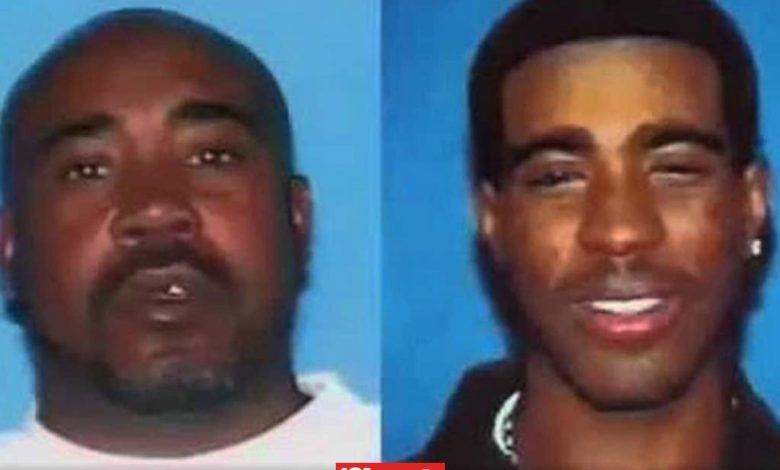
After three decades of speculation, theory, and dead ends, hip-hop’s most infamous cold case finally goes to jury. Duane “Keffe D” Davis walks into a Las Vegas courtroom Monday, August 10, to face trial for allegedly orchestrating the 1996 drive-by shooting that ended Tupac Shakur’s life. This is the moment the culture has waited for since the moment Pac slumped in that BMW with Suge Knight at the wheel.
Davis, 63, is the only person ever charged in the killing. Prosecutors don’t have to prove he pulled the trigger—they just have to prove he called the shots and provided the gun. And they say they have it locked in: court records show the prosecution plans to call Suge Knight himself, Tupac’s sister Sekyiwa, his stepbrother Mopreme, plus documentarians, investigators, and jailhouse phone recordings of Davis talking deals with music manager Wack 100 about turning his life into a series. The trial is expected to run a full month, making this the longest-running examination of the East Coast–West Coast beef’s deadliest moment.
Here’s the play-by-play: On September 7, 1996, Tupac and Knight were stopped at a red light in Vegas after watching Mike Tyson KO Bruce Seldon at the MGM Grand. A white Cadillac pulled up alongside them. Gunfire. Four bullets hit Pac. He died six days later. For 27 years, nothing. Then in September 2023, Davis got arrested. His own memoir—dropped in 2019 as “Compton Street Legend”—had already snitched on himself. In it, he admitted he was in the car doing the hitting. He claimed his nephew Orlando “Baby Lane” Anderson, who’d just fought Tupac in the casino lobby an hour earlier, was the trigger man. (Anderson himself denied it and was killed in 1998 in an unrelated Compton shooting.)
The nuts and bolts are damning. Davis allegedly told interviews, a federal task force, and his 2019 memoir that he obtained a gun and tossed it into the back seat—then wouldn’t say who fired. Prosecutors have recordings of him on VladTV and jailhouse calls talking business with Wack 100 about monetizing his story. His defense? Reasonable doubt. They claim new evidence shows Davis wasn’t even in Vegas when Tupac got shot—that a private investigator has witnesses proving it. They’ve also argued his memoir was “fictionalized” and co-written, so nobody knows which parts are his confession and which are fiction. It’s a stretch, but it’s what they’ve got.
Davis has been locked down since his arrest, first without bail, then on a $750,000 bond (paid by Wack 100, which itself became evidence the prosecution used against him). He’s pleaded not guilty. He’s also been serving time for fighting another inmate in Clark County Detention Center—a 16-to-40 month sentence that showed the jury who they’re dealing with. A man in his 60s still throwing hands inside.
What makes this trial matter beyond the headlines: It’s closure for a generation that grew up with Tupac unsolved. For hip-hop culture, it’s the reckoning with the gang violence that killed two icons in two years (Biggie fell six months after Pac). For the legal system, it’s a case file that should’ve been stone cold coming back hot because someone couldn’t keep their mouth shut. Davis confessed in interviews, on tape, in a published book, and to federal agents. The defense will try to muddy that. But when you’re one of the only people alive who was in the car that night, and you’ve been on record saying what you did for nearly two decades, the stand gets mighty uncomfortable.
The 16BARS take: This trial won’t tell us who pulled the trigger, but it will tell us if Keffe D swung the order. After 30 years, the culture finally gets a courtroom instead of a cold case file—and that matters, even if justice moves slower than street time.